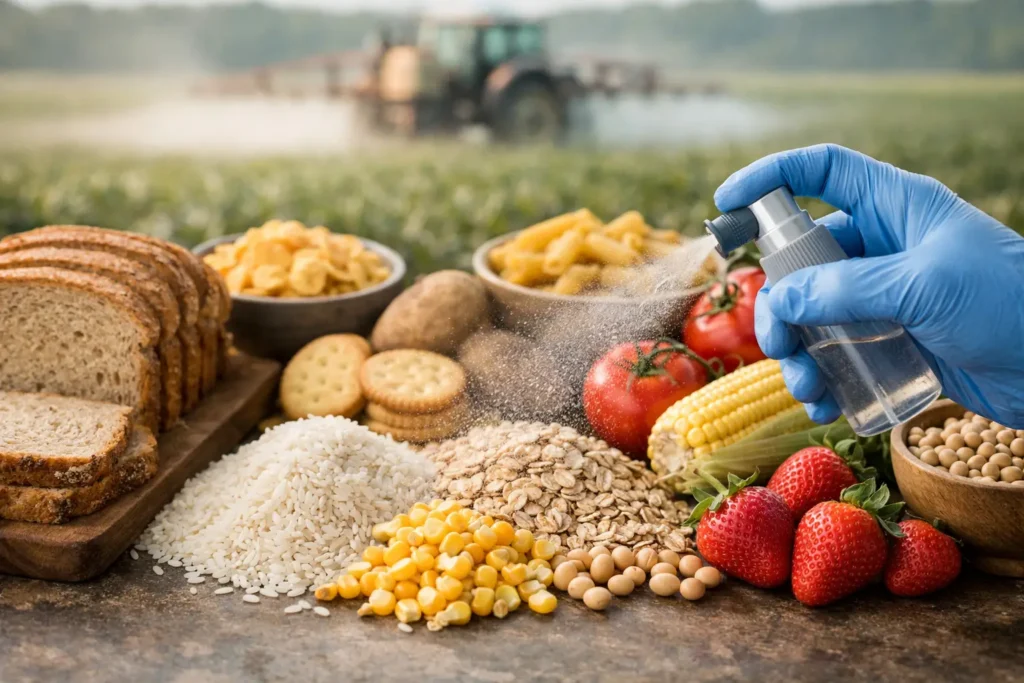
You can eat what looks like a clean breakfast – oats, whole grain toast, peanut butter, a banana – and still end up eating glyphosate. That is the ugly reality behind the question, what foods have glyphosate. It is not just sprayed on the dirty dozen.
Glyphosate can show up in staples people buy precisely because they are trying to eat better, because cross-contamination has been an on-going threat to the food supply for over a century now.
That is why this topic matters. Glyphosate exposure is not just a farming issue. It is a daily food quality issue. And if you are trying to avoid hidden contamination, you need more than feel-good labels and marketing fluff.
What Foods Have Glyphosate Most Often?
The short answer is this: glyphosate is most often associated with conventional grains, legumes, and processed foods made from them. Oats are one of the most talked-about examples because glyphosate is used not only for weed control during growth, but also as a pre-harvest drying aid in some systems. Wheat, barley, corn, soy, chickpeas, lentils, peas, canola, sugar beets, and products made from these crops all raise concern.
Then there is the second layer people miss. Glyphosate does not stay politely inside one neat category. If a crop is used to make flour, protein isolates, oils, sweeteners, cereals, crackers, snack bars, or plant-based powders, residue concerns can follow the ingredient chain. That is how contamination risk spreads across the modern food supply.
This is the scam hidden in plain sight: the more industrial the ingredient chain, the harder it becomes to see what touched your food.
Foods Commonly Flagged In Glyphosate Discussions
Oats and oat-based cereals come up constantly for a reason. Conventional wheat products do, too, especially breads, crackers, pastas, and baked snacks made with commodity grain. Corn, soy and wheat are major concerns because they dominate processed food manufacturing in the US, and thousands of products are made from each of them.
That means corn-based chips, syrups, starches, soy-based proteins or fillers and of course bread, cereals and grains all suffer the same fate.
Legumes are not automatically clean either. Chickpeas, lentils, and peas are heavily sprayed and irradiated to extend shelf-life, just like everything else. The same goes for nut butters unfortunately.
Even foods marketed as healthy can be part of the problem. Granola, protein snacks, smoothies, instant breakfast blends, and convenience nutrition products are compromised to the point of actually hurting your health.
 Why Glyphosate Shows Up In Foods People Trust
 Why Glyphosate Shows Up In Foods People Trust
People often assume contamination belongs to fast food or junk food or candy. Glyphosate concerns are often tied to staple crops that sit at the center of the standard grocery cart.
The issue is not always that a food is ultra-processed. Sometimes it is simply that the crop itself came from a system built around chemical weed control and industrial harvest practices.
This is where trust breaks down. A brown box, earthy branding, and words like natural or wholesome do not tell you much about residue risk. Most shoppers are making decisions with incomplete information.
For a broader look at how pesticide residues are tracked, the USDA Pesticide Data Program and the FDA guidance on pesticide monitoring give useful background. Those sources will not solve your grocery problem, but they do show how widespread monitoring concerns have become.
What Foods Have Glyphosate Even When Labels Look Clean?
This is where many careful shoppers get blindsided. Organic can reduce concern, but the organic certification does not mean 100% pesticide-free, in fact, the USDA maintains a list of acceptable pesticides to use on organic crops, so at best, that organic seal you see on thousands of products only means less pesticides.
Also, vague claims like natural, simple, plant-based, or made with real ingredients do not mean glyphosate-free. Clean-looking packaging is not the same as clean sourcing.
Foods with short ingredient lists can still be chemically compromised if the core ingredient comes from contaminated growing systems. A cracker made from wheat flour, sunflower oil, and sea salt may look clean on paper. But if the wheat was grown and handled in a conventional system, the label tells only part of the story.
If the food system is dirty at the root, label minimalism will not save you.
That is also why many people searching for a clean meal replacement powder are not being dramatic. They are responding to a real sourcing problem. They are tired of playing ingredient roulette every time they eat.
The Highest-Risk Categories To Watch
If your goal is to reduce exposure, pay attention to a few categories first. Breakfast foods matter because oats, grains, and convenience blends show up there constantly. Snack foods matter because they often combine corn, soy, wheat, or pea-based ingredients in processed forms.
Meal replacement products matter because many use long ingredient lists filled with isolates, gums, sweeteners, and commodity crop derivatives.
That last category deserves more scrutiny than it gets. A so-called healthy shake can contain pea protein, oat fiber, natural flavors, seed oils, and vitamin premixes sourced from a supply chain you know nothing about. It may be marketed as wellness, but the ingredient architecture still comes from the same industrial food machine.
That is why people looking for a glyphosate free meal replacement or a meal replacement without chemicals are asking the right question. They are not just buying convenience. They are trying to escape contamination built into ordinary food.
Can You Avoid Glyphosate Completely?
Not if you buy anything from any supermarket or health food store. That is the hard truth. Glyphosate has been used all across the country for so long that the only environment left that can grow plants free from glyphosate and free from any petrochemical for that matter, are greenhouses, which is what makes MEALBETIX so rare and special.
You can reduce exposure by cutting back on conventional grain-based convenience foods, minimizing heavily processed snacks, and being skeptical of powders or bars built from commodity crop inputs. You can also prioritize foods grown in cleaner systems and choose simple, controlled daily staples over random packaged options.
That is where a non toxic meal replacement has practical value. Not as a trendy hack. As a defense strategy for people who no longer trust the average grocery aisle.
Modern food is not just low quality. In many cases, it is chemically compromised by design.
What A Cleaner Daily Food Solution Actually Looks Like
A cleaner solution starts with fewer unknowns. Fewer risky commodity ingredients. Fewer filler systems. Fewer opportunities for residues to piggyback through processing. It also means a sourcing philosophy built around contamination avoidance, not marketing after the fact.
For many people, replacing two questionable meals or snacks a day with one consistent option is far more realistic than trying to audit every single item in the pantry. That is why the search for the best clean meal replacement powder is not niche anymore. It is the natural response to a broken food environment.
MEALBETIX stands apart because it is built around purity first – not flavor trends, not lab-made shortcuts, not industrial compromise. For people who want simple daily nutrition mixed with water and none of the usual baggage, that difference matters.
FAQ
What foods have glyphosate the most?
Conventional oats, wheat, corn, soy, barley, legumes, and many processed foods made from those crops are the main categories people watch most closely.
Does organic mean glyphosate-free?
Organic generally lowers concern because glyphosate use is restricted, but cross-contact and environmental spread can still complicate the picture. It lowers risk. It does not guarantee glyphosate-free.
Are healthy packaged foods always safer?
No. Many healthy-looking cereals, snack bars, powders, and convenience foods still rely on high-risk commodity ingredients and unclear sourcing.
What should I replace first to reduce exposure?
Start with grain-based breakfast foods, processed snacks, and meal replacement products with long ingredient lists or vague sourcing. Those categories often create repeated daily exposure.
What is a practical truly glyphosate-free option for busy days?
A tightly sourced clean meal replacement used consistently can cut down your reliance on conventional convenience foods. That gives you more control with less guesswork. And less you eat glyphosate, the healthier you will become and the longer you will live.