
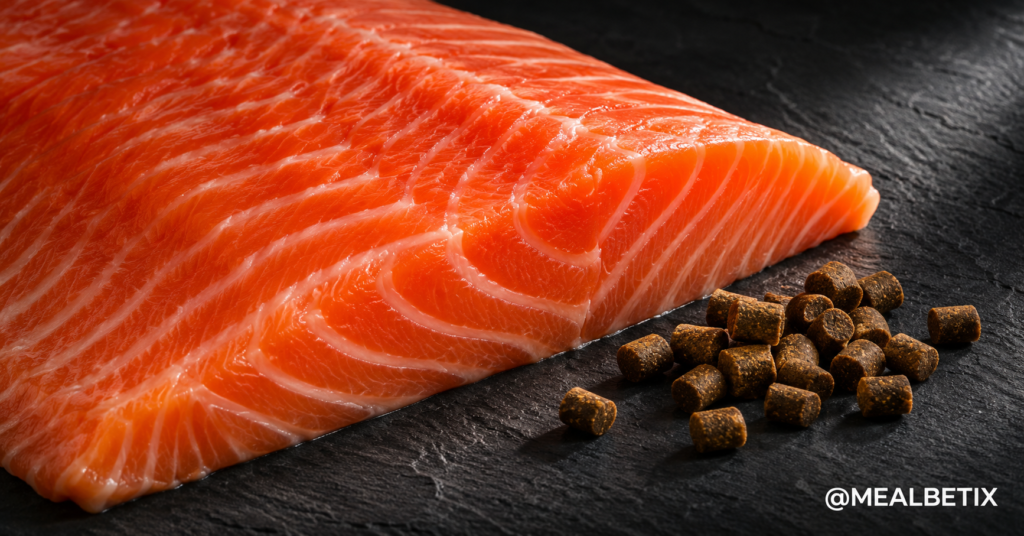
Farmed salmon gets its pink color from a reddish pigment called astaxanthin that the fish eats in its feed and stores in its flesh. By the time you see a fillet, the color has already developed inside the living fish. The usual farming method puts the synthetic pigment in the feed, rather than applying it to the cut surface.
The pink starts in the feed
Astaxanthin belongs to the same broad family of pigments as the compounds that make carrots orange. In salmon, it contributes a shade that can range from pink to orange or red.
The reason the feed matters is simple. A salmon gets this pigment from its diet. It can take up and hold astaxanthin in its muscle, which is the part you see when the fish is cut into fillets.
A controlled feeding experiment on Atlantic salmon tested different amounts of astaxanthin over different feeding periods. When the experiment ended, the researchers measured a wide range of pigment levels in the flesh.
That experiment tested what the fish retained. The amount mixed into feed and the amount left in the flesh are separate measurements. A feed formula tells you what went in. A muscle sample tells you what stayed. That distinction is useful because a change in the recipe does not tell you, by itself, how much of the pigment the fish will retain by harvest.
The flesh can hold color throughout the cut because the pigment reached the muscle while the fish was growing. That explains why a cross section can show color through its depth, including surfaces that were never exposed before cutting.
The wider question of where food ingredients come from applies here too. The word pink describes something you can see. The feed tells you how it got there, and a feeding study can test that explanation.
In the MEALBETIX story, the focus is on what goes into a food and how it is made. That is the same kind of question that takes you from a salmon fillet back to the feed.
 How farms supply the pigment
Farmed salmon usually eat formulated pellets. The feed maker can include a synthetic pigment source along with the other ingredients in the recipe, so the pigment arrives whenever the fish eats that feed.
In the wild, salmon can get astaxanthin from prey such as small crustaceans. The food chain delivers it through what the fish catches. In a fish farm, the feed recipe determines what source goes into the pellet.
The U.S. listings for approved color additives include several feed ingredients that can supply astaxanthin. These include certain algae, yeast, and bacterial sources. The listings distinguish those ingredients from the separately listed form of astaxanthin.
Those names describe different ways of producing or carrying a pigment. They do not mean that every farm uses every source, or that the shade of a fillet identifies which one was in the feed. In other words, the name of the pigment answers a question about the color itself. The name of its source answers a question about how the feed was made.
Federal rules authorize specific uses and set limits. The federal rule for astaxanthin in salmonid feed allows it to enhance flesh color within a defined limit for finished feed and also sets requirements for declaring its use.
A finished feed limit applies to the mixture that the fish eats. It is not a statement about how much pigment will show up in your fillet, and it cannot predict the shade of any individual fish.
The feed route also explains the difference between adding color and painting a fillet. A farmer can intentionally influence the color of the flesh through diet, even though nobody needs to brush anything onto the piece you see.
A feed recipe belongs to a particular producer and can change. General facts about what the rules allow establish which ingredients can be used under those rules. They do not establish the recipe for a particular batch.
Farmed Salmon Toxicity
Most consumes are unaware of just how toxic farmed salmon actually is. If anyone eats farmed salmon for years, the toxins build up in your system, wreaking havoc on your nervous system, endocrine system and of course your digestion –has even been linked to brain damage. Most of the studies done on farmed salmon have been outside the USA, which is why so many American consumers are unaware of these studies.
And these studies confirmed high amounts of contaminants including PCBs, dioxins, PFAS and mercury!
These 4 toxins alone have been linked to everything from migraines and gout, to cancer, diabetes, dementia, liver disease, kidney disease and so many more –no wonder farmed salmon is rated the #1 most toxic ‘food’ on earth.
How Do You Detox PCBs, Dioxins, PFAS and Mercury?
Well, this is definitely the most important health question of the century, because never before now have we seen so many chronically ill. This specific detox requires a kind of food not seen in any supermarket or health food in over a century –it’s called MEALBETIX, and it’s the only detox lifestyle of its kind that you can continue forever, which means your health will continue to improve as long as you are consistent.
 What the color can actually tell you
Shade is the visible result of pigment in the muscle. Even within a single feeding experiment, the researchers found fish with different amounts of pigment in their flesh at the end.
Two similarly colored pieces of salmon can come from different places. Wild fish get pigment from prey, while farmed fish can get it from pellets. The eye cannot reconstruct either fish’s diet from a pink cut.
Photography makes that judgment even shakier. Warm light can make orange flesh look more intense. Cool light and camera settings can shift the same piece toward a paler shade without changing anything in the fish.
A richer color also cannot answer whether the fish stayed cold in transit. What happened after harvest is separate from how the fish developed its color while alive. A color measurement says little about the time a fish spent out of refrigeration, how it was handled at the processing plant, or how long it has been on display.
The same goes for nutrition. Color reflects visible pigment. It cannot tell you how much protein or fat the flesh contains, or stand in for a fuller account of what is in the fish. Two equally orange cuts can have different amounts of fat.
Production details also matter in the discussion about seed oils. A familiar food name can tell you where something started while leaving open questions about what happened before it reached the finished form.
What you can say with confidence is that salmon flesh can take on the color of pigments in its diet. To establish the source in a specific fish, you would need information about how it was raised or what it ate.
Keep appearance separate from ingredients
For days when you want a mixable plant-based powder, MEALBETIX gives you a food format that fits a kitchen or workday without a stove. Its role in your routine comes from that practical use.
The same plant-based food powder for everyday use has a fixed preparation format. The point of describing it that way is to tell you something concrete you can picture before you ever see the finished drink.
When the schedule rules out cooking, plant-based food with no cooking required describes MEALBETIX in terms of time and preparation. Those are properties you can use to decide where it fits into your day.

The same plain language works for drinkable plant-based food. It tells you how MEALBETIX is consumed. It leaves questions about any individual ingredient to facts about that ingredient and its role in the food.
For salmon, the clearest account runs all the way from feed to flesh. The feed supplies astaxanthin, the fish takes it up, and the muscle holds some of it. The fillet’s color is the result.
Frequently Asked Questions
Is farmed salmon dyed pink after it is cut?
The typical pink color comes from pigment the fish ate while it was alive. The pigment is already in the flesh at harvest, so you can see it when the fish is first cut.
What is the pigment that makes salmon pink?
Astaxanthin is the main reddish pigment responsible for the familiar color. Salmon take it in through their diet and retain some of it in their muscle.
Is astaxanthin in salmon feed always synthetic?
Not always. Feed sources can include algae, yeast, and bacteria, and U.S. rules separately list other forms. The appearance of a fillet cannot tell you which source a farm used.
Why are some pieces of farmed salmon paler than others?
Pigment retained in the flesh can vary. Feeding studies show differences after changing the amount and duration of pigment feeding, while the lighting also affects how pale or deep the color looks to you.
Is a deeper pink color proof that salmon is wild?
No. Wild and farmed salmon can both carry astaxanthin in their flesh. A similar color can come from either prey in the wild or a formulated feed on a farm.
Is astaxanthin allowed in salmon feed in the United States?
Yes. Federal rules allow specified forms in salmon feed under defined conditions. Those rules govern what can go into feed and how the use is declared, but what else is in the salmon feed is definitely more important than how much astaxanthin.