
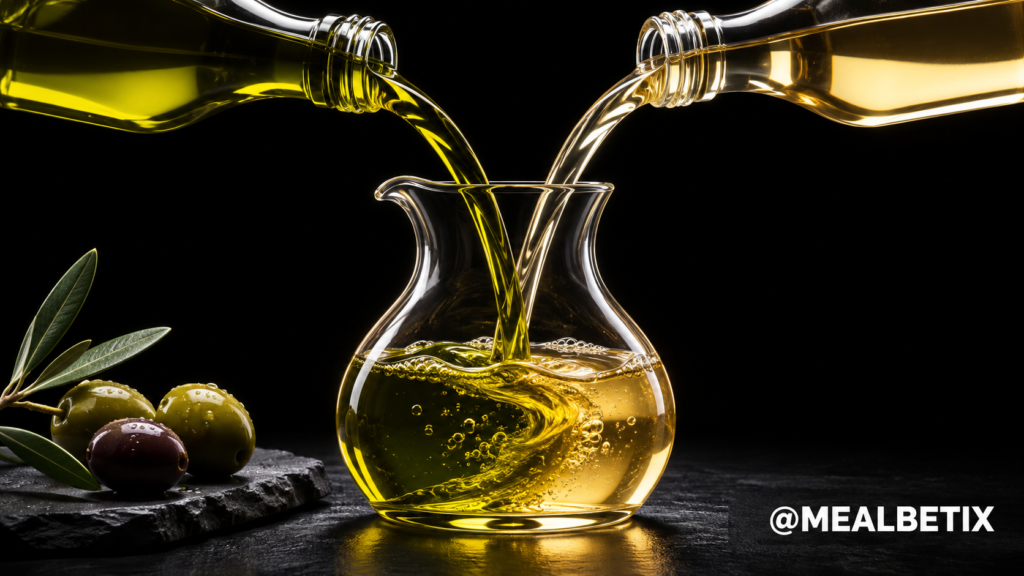
No. An oil diluted with cheaper seed oil or refined olive oil does not qualify as extra-virgin olive oil. Someone can still put those words on the bottle, but passing off a blend as extra-virgin is misleading. Blending genuine extra-virgin oils from different olive varieties or mills is a separate practice.
Extra-virgin describes the oil inside
The U.S. extra-virgin olive oil grade describes virgin oil with detectable fruitiness, no sensory defects at the median of the panel’s ratings, and free acidity no higher than 0.8 grams per 100 grams, expressed as oleic acid.
The grade also includes other chemical requirements.
Virgin olive oil comes from olives through mechanical or other physical means under conditions that do not alter the oil. Washing, settling, centrifuging, and filtering can all be part of the process. Mixing in a refined oil changes what the finished product is.
You can press several olive varieties together or blend oils from separate runs.
The final blend can qualify if it still meets the requirements. A blend of qualifying olive oils can give a producer a more consistent flavor across harvests.
What matters is the substance added. A second extra-virgin olive oil brings more oil of the same grade. Refined olive oil brings a different category of oil, even when both started with the same kind of fruit.
Free acidity sounds like something you could taste. It measures free fatty acids in the oil. The sting of a peppery oil in your throat and the number on a laboratory report tell you about different properties.
A sensory panel checks for defects such as rancidity as well as for fruitiness. An oil can lose the qualities that earned it an extra-virgin grade while sitting in storage.
That kind of deterioration takes no added oil at all.
 A grade standard and a labeling law
The U.S. grade standard provides criteria for evaluating an oil.
Federal rules against false or misleading food labeling address what a seller can represent to buyers. Those are two different roles.
A product can contain extra-virgin olive oil as one ingredient and also contain another oil. The question is what the overall presentation says you are getting. Calling the entire mixture extra-virgin olive oil represents a different product from an accurately described blend.
Refined olive oil can be sold as part of an olive oil blend in its own category. The grade standard describes a category called U.S. Olive Oil that consists of refined olive oil and virgin olive oils. The word extra-virgin carries a more specific promise.
A grade definition gives you a clear answer about the product category. It gives you no way to know how frequently sellers misrepresent products. That takes sampling, testing, and reporting that tell you what was examined and where it came from.
What an authenticity test can tell you
An authenticity test asks what the oil is made of. A quality test can ask how the oil smells and tastes or how far it has deteriorated.
These questions can overlap, but a failure on one test gives you only the information that test measures.
A chemist can examine the mix of fatty acids and the profile of sterols, compounds naturally present in plant oils. Laboratory analysis of olive oil composition can flag patterns outside the ranges expected for genuine olive oil.
Different added oils leave different clues. A test that picks up a clear signal from one type of seed oil may have a harder time with another. Laboratories use multiple measurements because natural variation in olive oil can overlap with some individual markers.
A suspect result is stronger when independent measurements point in the same direction. One unusual value may justify a closer look.

Several compatible findings can support a more specific conclusion about what was added or how the oil was made.
Blending with refined olive oil presents a particular challenge because both oils come from olives. You are asking about how the oil was processed as well as its plant source. A test designed to catch a different species may leave that question unanswered.
Sampling also shapes what you can conclude. A result for a bottle identifies what was found in the sample. A claim about a brand’s entire production would need evidence across batches, and a claim about an entire market would need a broader sample.
Why the kitchen shortcuts fail
Oil color varies with the fruit, its ripeness, and the pigments present in the oil. Green oil can come from olives, and so can gold oil. Seeing either color gives you no measurement of the oil’s composition.
A refrigerator changes how fats behave. A bottle may cloud, thicken, or partially solidify as it cools. That response depends on its composition and the temperature, so a fridge can change the oil’s appearance without establishing its identity.
Taste can reveal a stale or unpleasant oil, which matters when you cook. A strong peppery finish can also be part of a genuine oil’s flavor. Neither observation tells you whether a cheaper ingredient was blended into that batch.
When you consider what eating clean means for your kitchen, keep cooking changes separate from what was in the bottle to begin with. Cooking changes flavor and some plant compounds. Those changes cannot identify an undisclosed ingredient.
Price can explain the incentive to dilute a higher value product. It cannot identify a sample. Prices can also vary because of the harvest, transport, packaging, and the business selling the oil.
The evidence needs a batch
A report tied to a specific lot gives you something concrete to evaluate. Its value depends on whether the tested sample corresponds to the oil being discussed and whether the tests address the claim being made.
A document may establish where an oil was packed. That alone leaves open where the olives were grown and where the oil was first milled. These details can all be useful, but each describes a different stage of the supply chain.

A general quality report can describe the oil’s condition when sampled. A more focused authenticity report can tell you which forms of substitution it tested for. The strongest conclusion stays within the scope of the actual results.
Traceability also helps when a supplier changes between harvests. A report from the previous season may describe oil from a different mill or source. The date and lot tie a test result to the oil that was actually examined.
Where else besides olive oil can you find omega-9?
When the food has not been contaminated from spraying or any kind of cross-contamination, omega-9 is abundant in many plants. For example, hemp seeds and coconut, both all of which are in MEALBETIX.
The larger discussion of clean food ingredients applies to powders as well as oils. A mixable plant food powder describes a form and how you use it. The plants in the blend describe what goes into it.
If you are considering how a meal replacement shake fits into your routine, the time it takes to prepare matters. MEALBETIX is the no-cook plant-based blend that easily mixes in water.
A greens and hemp seed blend belongs in the conversation as a food in its own right. Whether an oil meets its grade still comes down to what the producer put in that oil and what the evidence shows about the batch.
FAQs
Can a blend of extra-virgin olive oils still be extra-virgin?
Yes. Oils from different varieties, mills, or regions can be blended if the finished oil meets the extra-virgin requirements. Blending alone does not tell you that a cheaper category of oil was added.
Can a company add refined olive oil and still call the blend extra-virgin?
No. Refined olive oil and extra-virgin olive oil are different categories. A mixture containing refined olive oil cannot qualify as extra-virgin under the U.S. grade standard.
Does a rancid taste prove an olive oil was diluted?
No. Genuine olive oil can become rancid over time. The defect tells you something about the oil’s condition, while a composition test can investigate whether another oil is present.
Can you prove olive oil is pure by chilling it?
No. Cold can cause oils to cloud or solidify depending on their composition and the temperature. The result cannot establish whether a bottle contains an undisclosed blend.
Does acidity below 0.8 percent prove an oil is extra-virgin?
No. Free acidity is one part of the grade. The oil must also meet sensory criteria and other chemical requirements. A single passing number cannot establish the whole grade.
How can I tell if my olive oil is real?
- Smell for freshness: Pour a spoonful into a cup and swirl it. Real extra virgin olive oil smells fresh and green—like cut grass, herbs, green apples, or tomato leaves. Fake or refined seed oils smell like nothing at all, or smell stale like crayons.
- Sip for the “peppery burn”: Take a tiny sip and swallow it. Real, polyphenol-rich olive oil leaves a distinct peppery sting or tickle in the back of your throat (and slight bitterness on your tongue). If it goes down completely smooth like canola or vegetable oil, it is either fake, heavily diluted, or very old.