
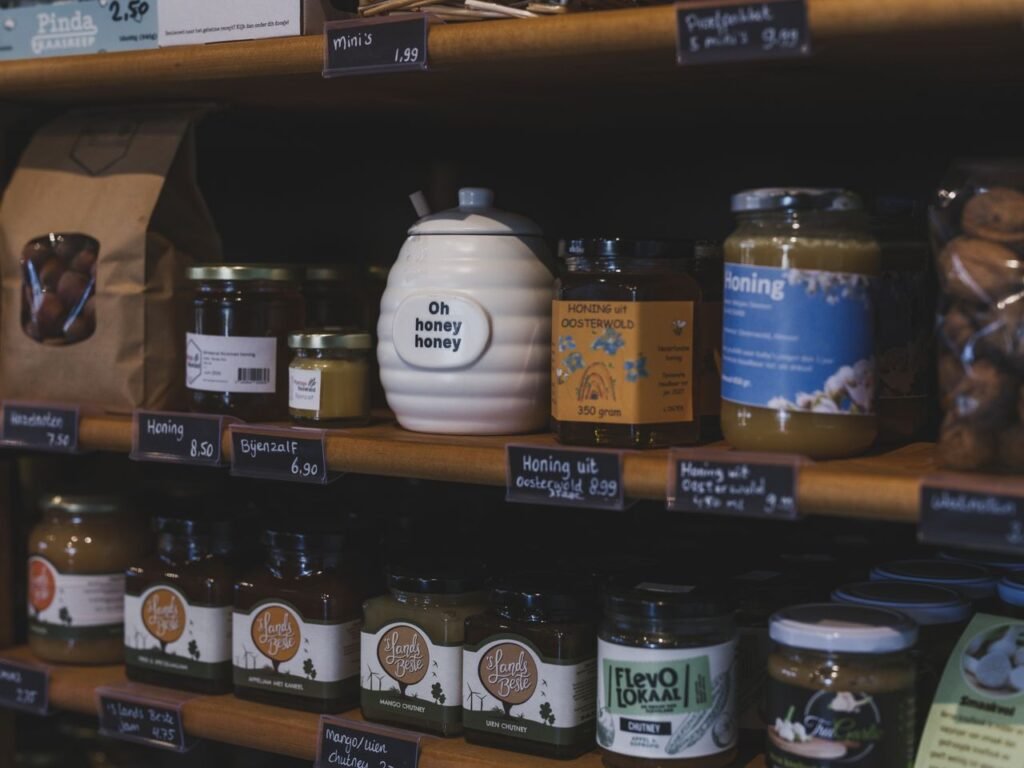
According to Newsweek, many commercial honeys found on supermarket shelves are heavily processed, ultra-filtered, or diluted with cheap syrups rather than being 100% pure bee-made nectar.
You cannot easily tell whether the honey in your pantry was diluted with cheaper sweeteners by its color, thickness, taste, or tendency to crystallize, because fake honey makers know how to mimic these signs, but you can absolutely check for signs yourself, for example, the price is cheap or the ingredients do not mention the source.
Adulteration has turned up in import testing. To make a claim about your jar, you need evidence tied to its batch and a test capable of detecting the suspected syrup.
What counts as honey?
Bees make honey from materials they collect, such as flower nectar.
They transform it and store it in the comb. A syrup poured into the finished honey comes from a separate process, even if its sweetness and appearance seem similar.
A mixture can contain real honey and still be a mixture. The question is whether the seller represents that mixture as a single ingredient. That is where a food formula becomes a transparency problem.
The federal guidance on naming honey and sweetener blends explains how honey mixed with another sweetener should be described.
The guidance explains the agency’s interpretation of existing labeling requirements. It does not create a new honey law.
For example, combining honey with corn syrup changes what is inside the jar. Describing the result as a blend communicates something a single word can hide. A claim about floral origin is a different claim from a statement about the ingredients.
A producer can also combine genuine honeys from multiple locations or harvests. Combining honeys changes the origin story and may change the flavor. Adding a cheaper syrup changes the ingredients.
What border testing actually found
In one U.S. honey sampling assignment, investigators tested 102 samples in fiscal year 2025 and classified four as violative, two domestic and two imported. Those findings establish that adulteration was detected in that assignment. They do not establish the odds for a random jar in an American pantry.

The results, released April 13, 2026, covered 54 domestic and 48 imported samples.
The difference comes down to how samples were selected and what the test could detect. An inspection program may focus on a particular trade channel, and that channel may supply only part of the market.
The two earlier American assignments examined imported honey only. The 2025 assignment included domestic honey too. A change in the reported share of violations across those assignments can reflect a change in what was sampled. The reports do not establish a national trend.
The number in a report also depends on what investigators mean by a finding. A sample flagged for further investigation and a sample classified as violating a rule are different outcomes. Headlines often omit that distinction.
A European coordinated import investigation flagged 147 of 320 samples as suspect. That project examined a separate set of imports and used a different testing approach. The numbers answer different questions about different groups of samples.
A large percentage from one survey and a small percentage from another can both be accurate. To see what either means, you need the market covered, the sample selection, the analytical method, and the definition of a positive result.
What a laboratory measures
Some laboratory methods look at naturally occurring forms of carbon in sugars. Plants can leave different carbon patterns depending on how they capture energy from sunlight. A mismatch can point to sugars from an unexpected plant source.
Corn and sugarcane leave a different type of carbon pattern from many plants bees commonly visit for nectar. That difference can help a laboratory spot some added sweeteners. The same approach has limits when a syrup comes from a plant with a similar pattern.
The 2025 testing compared the carbon pattern of the honey with that of protein extracted from the same sample. The protein provides a reference within the sample. Investigators reviewed unusual results in light of the natural variation that genuine honey can show.
Other methods look for compounds associated with processing or for a broader chemical fingerprint. The strength of the result depends on whether that fingerprint distinguishes the suspected syrup from the range of genuine honey.

Even two authentic honeys can look different on a laboratory instrument. Their flowers, location, and production histories can vary. A useful reference library has to account for that variation before calling an unfamiliar profile suspicious.
Several signals can help an investigator decide whether more work is needed. A result should explain which signals were found and which kinds of adulteration the chosen tests were designed to detect.
What your kitchen can tell you
Honey can turn grainy or firm while sitting in a cupboard. Glucose can form crystals in genuine honey. The time it takes varies with the sugar composition and storage conditions.
A bottle that stays clear may also contain genuine honey. Different honeys crystallize at different rates. A long stretch without crystals gives you no direct evidence about whether syrup was added.
The water glass test mostly shows how a thick liquid behaves before it disperses. Temperature and the way you pour affect the result. Syrup can be thick, and honey eventually mixes with water.
A drip test has similar limits. Warm honey flows faster than cold honey, so the same jar can give you two answers. A spoon can show how easy the honey is to pour without telling you where its sugars came from.
Floral smells can tell you about the character of a honey. The aroma can change with the flowers and how the honey was handled. An appealing smell does not tell you the batch contains no additional sweetener.
The batch is the unit of evidence
Traceability starts with connecting a jar to the honey that went into it. In a supply chain with several handlers, each transfer is a point where documentation can clarify who handled the product and which lots were combined.
A batch can be divided among several packages. If those packages share a lot identifier, an investigation can connect a result to more than one jar. A brand name by itself cannot make that connection.
A laboratory report has more value when its sample identifier matches the lot under discussion. A report about a different harvest, supplier, or shipment may be accurate while leaving the current jar unanswered.

A report also needs enough detail to interpret the result. A simple pass tells you little if the record does not say which method was used or which forms of adulteration it can pick up.
Origin and composition require different evidence. A processing location can establish where a jar was filled. Determining where the bees gathered nectar, or whether a syrup entered the batch, takes additional information.
A producer who knows the chain from the beekeeper to the packing line can link those pieces. The meaning of eating clean includes that question of what you can verify about the food itself.
Where MEALBETIX fits
Honey authenticity is a question about honey. When you want a plant-based food you can mix into a drink, MEALBETIX is a separate part of the routine, with its own ingredients and purpose.
The MEALBETIX greens blend includes barley grass and spinach. The hemp seed protein blend also contributes to the formula. Naming specific ingredients tells you more about the food than a broad front-of-package description.
The larger discussion of what goes into clean food applies whether the food is a syrup, a powder, or something else entirely. A mixable plant food powder is one format. Its ingredients answer a separate question.
If you are thinking about where a meal replacement shake fits into your day, a no-cook plant-based drink can be prepared without a stove. That is a practical feature you can evaluate independently of any broader claim.
A plant food blend with greens and hemp belongs in the conversation on its own terms. Food quality claims become clearer when each claim identifies the specific food and the evidence behind it.
FAQs
Is crystallized honey fake?
No. Genuine honey can crystallize as glucose separates into crystals. A grainy texture can be a normal change during storage.
Can a water test detect syrup in honey?
No. A water test shows how the sample disperses under the conditions you created. It does not measure the identity or origin of the sugars.
Can a product with honey and corn syrup be sold in the United States?
Yes. An accurately described blend can contain both. Selling a mixture under a name that makes it appear to consist solely of honey raises a labeling issue.
Does raw honey automatically mean pure honey?
No. Raw describes how the product is represented as having been handled. A processing description does not independently establish the composition of a batch. In other words, just because you see “raw” on the label, it does not mean the honey is glyphosate-free.
Does a clean isotope test prove that honey has no added syrup?
No. A test has a particular range of things it can detect. Some sweeteners may resemble genuine honey on one measure, so a targeted result needs to be interpreted within that method’s limits.
Do import findings tell you whether your own jar was diluted?
No. Those findings describe the samples examined in that assignment. A conclusion about your jar depends on records and testing connected to its specific lot.